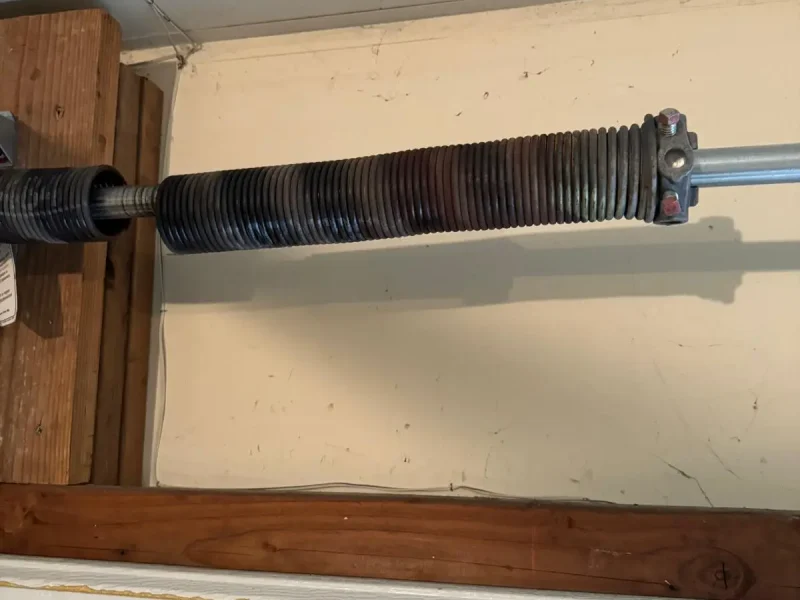
A homeowner in Bloomfield called last spring convinced her garage door opener had died. The motor was running, the chain was moving, but the door barely lifted six inches before stopping. After checking the opener, the real problem was obvious within seconds: one of the torsion springs had snapped clean through. The opener was working perfectly. It just couldn’t lift a 200-pound door on its own. That’s a scenario that plays out more often than most people expect, and it almost always catches homeowners off guard.
Springs do the actual heavy lifting for your garage door. The opener is just the trigger. When a spring is failing or has already broken, the symptoms can look like a dozen different problems, which is why so many people misdiagnose it. Knowing what to look for can save you from a stuck car, a damaged opener, or a door that comes down faster than it should.
Why Springs Fail Faster in Bloomfield Than You Might Expect
Bloomfield sits in a climate zone that’s genuinely hard on mechanical components. Winters regularly push below freezing for extended stretches, and summers bring humid heat that accelerates rust. That freeze-thaw cycle is particularly rough on torsion springs because metal contracts in the cold and expands when temperatures climb. Over time, that repeated stress weakens the coil at a microscopic level long before any visible damage appears.
Homes in the area also tend to be older, which means many are still running springs that were installed 15 or 20 years ago. Standard torsion springs are typically rated for around 10,000 cycles, and a cycle is one open and one close. A family using the garage four times a day hits that limit in under seven years. Plenty of homes are running springs well past that point without realizing it.
Salt used on driveways and roads during Connecticut winters doesn’t help either. It gets tracked under the door, and the moisture it carries accelerates surface corrosion on the spring coil. A spring that looks intact from a distance can have significant rust damage on its inner coils where you can’t easily see it.
The Warning Signs Worth Paying Attention To
The door moves unevenly or jerks during operation. A spring that’s losing tension won’t support the door evenly across its width. One side lifts faster than the other, and you’ll feel it in how the door moves. Sometimes it’s subtle, sometimes it’s dramatic. Either way, an uneven door is a mechanical stress problem that compounds quickly.
You hear a loud bang from the garage. A torsion spring snapping under full tension sounds like a gunshot inside the garage. Plenty of people hear it and think something fell or a tire blew. If you go into the garage and can’t find anything obviously wrong, look at the spring above the door. A broken spring will have a visible gap in the coil.
The door feels unusually heavy. This one comes up on service calls constantly. Someone tries to manually lift their door and it feels like it weighs twice what it should. That weight hasn’t changed, but the spring tension that was counterbalancing it is gone. If you disconnect your opener and the door won’t stay up or barely lifts, the spring system isn’t doing its job.
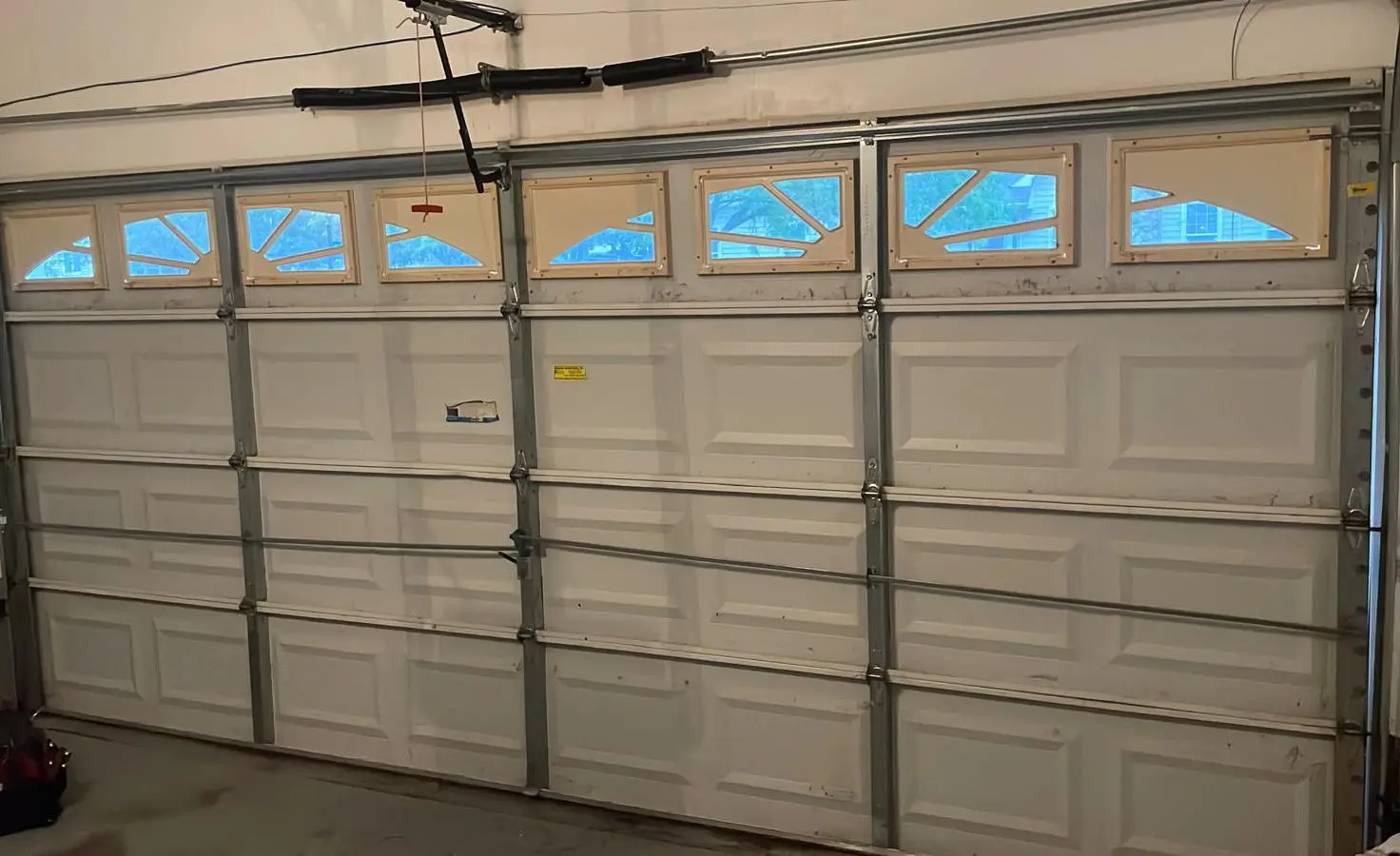
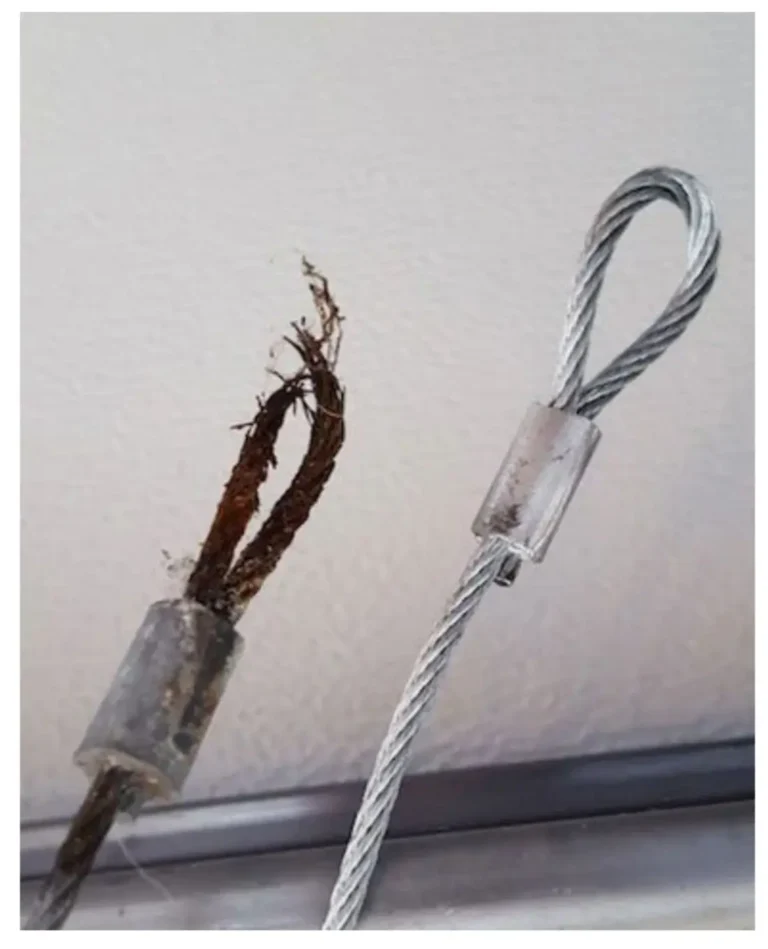
Cables are loose or hanging off the drum. When a torsion spring breaks, the cables that run along the sides of the door go slack. You’ll see them hanging or coiled at the bottom of the door instead of running tightly up to the drum. This usually means the spring has already failed, not that it’s about to.
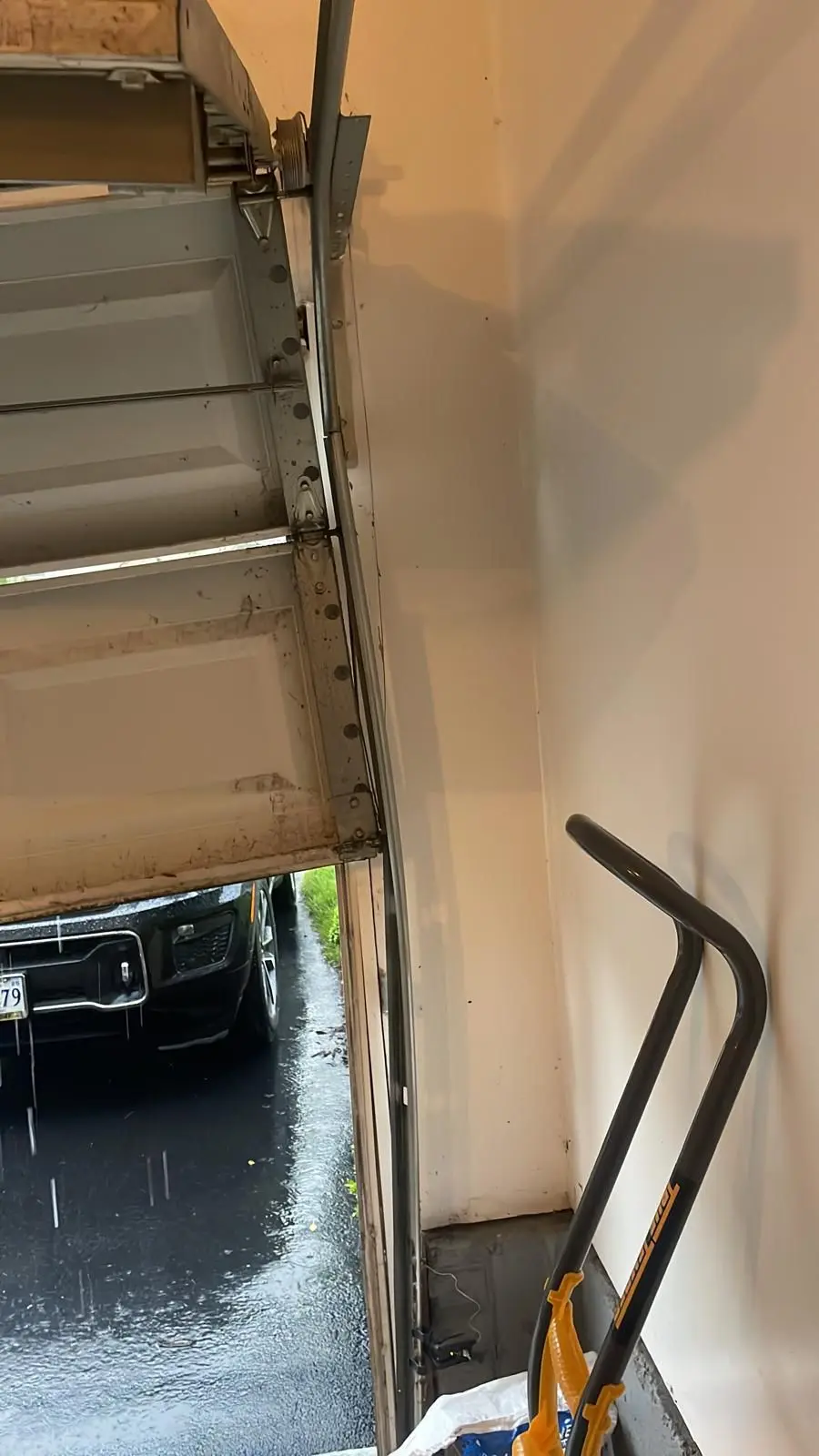
The top section of the door is bent. This is one of the more expensive symptoms to ignore. An opener pulling against a door with a broken spring puts enormous stress on the top panel. That stress bends the section around the attachment point. What starts as a spring repair can turn into a panel replacement if the opener keeps running against a dead spring.
A Second Scenario Worth Knowing
Earlier this year, a property in the Blue Hills area had a door that worked fine in the morning but wouldn’t close fully in the afternoon. The opener would run its full cycle, the door would travel down about three-quarters of the way, then reverse back up. The homeowner had already adjusted the limit settings twice and replaced the safety sensors, but nothing changed. When the spring tension was measured, one spring was significantly undertensioned compared to the other. The door was technically still moving, but with uneven support, it was triggering the opener’s resistance sensor on the way down.
The takeaway: a failing spring doesn’t always mean a completely non-functional door. Sometimes it creates intermittent problems that look like opener or sensor issues. If you’ve been chasing an electrical fix and the door still isn’t behaving, the springs are worth checking before anything else. Our garage door repair services cover exactly these kinds of diagnostic situations where the root cause isn’t immediately obvious.
What Happens If You Keep Using a Door With a Bad Spring
Running an opener against a broken or failing spring forces the motor to work against load it was never designed to handle. Most modern openers have thermal protection that shuts them down before they burn out, but not all do, and repeated overloading shortens the motor’s lifespan regardless. Beyond the mechanical damage, a door without proper spring tension is a safety hazard. Springs store a tremendous amount of energy. A door that drops unexpectedly because it’s not properly balanced can cause serious injury. This is one situation where continuing to use the door while waiting to schedule a repair is genuinely risky.
If a spring has snapped, the safest move is to leave the door in whatever position it’s in and avoid using it until it’s repaired. If it’s stuck open, that’s inconvenient. If it’s stuck closed, that’s frustrating. Either way, the emergency garage door repair option exists for exactly this reason.
Extension vs. Torsion: Does the Type Matter for These Symptoms?
Most homes in Bloomfield have torsion springs mounted horizontally above the door on a metal shaft. Older homes sometimes have extension springs, which run along the horizontal tracks on either side of the door. The warning signs are similar for both, but extension spring failures tend to be more dramatic visually because the spring can whip if it breaks without a safety cable installed alongside it.
If you have extension springs and they don’t have safety cables threaded through them, that’s worth addressing regardless of the spring’s current condition. It’s a low-cost addition that prevents a broken spring from becoming a projectile. Customers in the Bloomfield service area often have older systems with extension springs that haven’t been updated in decades.
What a Spring Replacement Actually Involves
Spring replacement isn’t a DIY job for most homeowners. The tension stored in a torsion spring, even on a residential door, is significant enough to cause severe injury if the spring is mishandled during installation or adjustment. Winding and unwinding springs requires specific tools and an understanding of how much tension a given spring needs based on door weight, height, and track configuration.
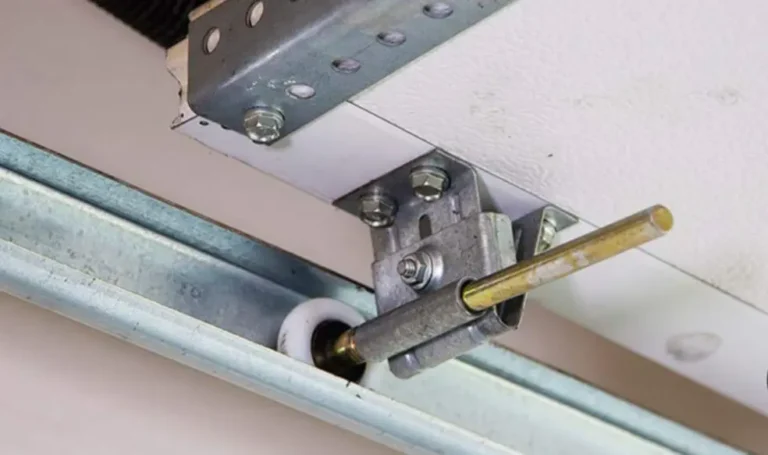
A proper replacement involves matching the new spring to the door’s specifications, not just buying a spring that fits on the shaft. An undersized spring will fail prematurely. An oversized spring will make the door too light and affect how the opener functions. When springs are replaced, it’s also worth having the cables, drums, and bottom brackets inspected at the same time since they experience the same wear cycle. You can read reviews from Bloomfield customers on our Yelp profile to get a sense of how these repairs are handled.
When spring work is needed, Entrilift Garage Door has been serving Bloomfield and the surrounding area with repairs that address the full mechanical picture, not just the part that broke. Reach out through the contact page to schedule a same-day assessment.
Ignoring a spring that’s showing signs of wear almost never saves money. It usually means a more expensive repair down the road and a door that’s unsafe to use in the meantime. If something feels off with how your door moves, the springs are the first place to look.
Frequently Asked Questions
How do I know if my garage door spring is broken? The clearest sign is a loud bang followed by a door that won’t lift, or a door that feels extremely heavy when you try to open it manually. You may also see a visible gap in the coil of the spring above the door.
Can I still use my garage door if the spring is broken? It’s not recommended. Using an opener against a broken spring overloads the motor and creates a real safety risk if the door drops unexpectedly. Keep the door in place and avoid operating it until the spring is replaced.
How long do garage door springs last? Standard torsion springs are rated for around 10,000 cycles. Depending on how often you use the door, that’s typically between 7 and 14 years. Cold climates and corrosion can shorten that lifespan.
Why did my spring break in cold weather? Metal contracts in cold temperatures, which increases stress on the coil. Springs that are already worn are more likely to snap during the first hard freeze of the season, which is why late fall and winter see higher spring failure rates in Connecticut.
Is it safe to replace a garage door spring myself? Spring replacement carries a real risk of injury if done without the right tools and experience. The tension stored in a torsion spring is substantial. Professional replacement is the safer choice for most homeowners.
What does a failing spring sound like before it breaks? Some springs give warning through squeaking, grinding, or a slight popping during operation. Others fail without any audible warning. If you hear new noises from the door, it’s worth having the springs inspected.
How much does garage door spring repair cost in Bloomfield, CT? Cost varies based on spring type, door size, and whether one or both springs need replacing. Getting a direct assessment from a local technician gives you an accurate number rather than a broad estimate.
Should I replace both springs at the same time? On a two-spring system, if one spring fails, the other has experienced the same wear cycle and is likely close behind. Most technicians recommend replacing both at the same time to avoid a second service call within a short period.
Why does my door only open partway and then stop? A door that reverses or stalls partway can indicate a spring that’s lost tension but hasn’t fully broken. The opener’s resistance sensor detects the extra load and stops the cycle. It can look like a sensor or limit problem when the actual cause is the spring.
How quickly can a spring be repaired in Bloomfield? Most spring repairs can be completed in a single visit. If a spring fails in a way that leaves the door stuck open or closed, same-day service is typically available through an emergency repair call.