A homeowner in Bloomfield called on a Tuesday morning after her garage door stopped closing the night before. The opener ran, the light came on, the door moved about a foot down, then reversed back up every single time. She had already checked the remote batteries, unplugged and replugged the opener, and assumed the unit was failing. After a quick inspection, the actual problem was a spider web built directly across one of the safety sensor eyes over the summer. Took about 30 seconds to clean. Door worked perfectly after that.
That call is a good reminder that a garage door that won’t operate correctly isn’t always a major mechanical failure. Sometimes it is. But a lot of the time, the cause is something straightforward that gets misread because the door behaves in ways that feel serious. The key is working through the system logically instead of assuming the worst.
Start With the Opener Before Assuming It’s the Door
When a door won’t move at all, the opener is the natural first suspect. Before anything else, check whether the unit has power. A tripped breaker or a loose plug accounts for more service calls than most people would guess. If the opener’s light turns on and the motor runs but the door doesn’t move, the problem is almost certainly mechanical rather than electrical.
One thing worth checking immediately is the disconnect cord. Every garage door opener has a red rope hanging from the trolley that allows manual operation during a power outage. If that cord gets pulled, intentionally or accidentally, the trolley disengages from the door carriage. The motor runs freely, the chain moves, but the door stays put. Re-engaging it takes about five seconds, but it’s easy to miss if you don’t know to look for it.
If the opener makes a humming sound but nothing moves, the motor capacitor may be failing. That’s an internal component issue that typically means the opener needs professional attention or replacement.
Sensor Problems Are the Most Common Cause of a Door That Won’t Close
Photo-eye sensors sit a few inches off the ground on either side of the door frame. They send an invisible beam across the opening, and if anything interrupts that beam, the door won’t close. It’s a safety feature, and it works as designed. The problem is that the sensors are sensitive enough to be triggered by things that aren’t actually in the way.
Direct sunlight hitting a sensor lens in the late afternoon can interfere with the signal. Dust, dirt, or cobwebs on the lens create the same problem. A sensor that’s been bumped slightly out of alignment, even by a quarter inch, will prevent the door from closing consistently. Most opener units have indicator lights on the sensors themselves. When both lights are steady, the beam is aligned. When one is blinking or off entirely, that’s where the problem is.
Cleaning the lenses and checking alignment takes a few minutes and costs nothing. It resolves the issue more often than any other single fix. Our garage door repair services cover sensor alignment and replacement when cleaning alone isn’t enough.
What the Door’s Movement Tells You
A door that moves but behaves strangely during operation is communicating something specific. Learning to read that behavior narrows down the cause quickly.
Door reverses immediately after touching the floor. The close-limit setting on the opener tells the motor how far to travel before stopping. If that setting is off, the opener interprets the door hitting the floor as hitting an obstruction and reverses. Adjusting the limit screw on the opener unit usually resolves this. The location of that adjustment varies by opener model, but it’s typically on the back or side of the motor housing.
Door opens partially and stops. This almost always points to a spring issue. A spring that’s lost tension or broken entirely limits how far the opener can push or pull the door before the motor’s resistance sensor stops the cycle. If the door feels heavy when you lift it manually, the spring system needs attention before the opener takes more damage.
Door is slow on the way up but normal going down. Worn or unlubricated rollers create drag that the opener has to fight against. The weight of the door helps it going down, which is why that direction feels normal. Going up, that friction becomes obvious. A round of lubrication on the rollers, hinges, and tracks often restores smooth operation without any parts replacement.
Door shakes or rattles during travel. Loose hardware is the usual cause. Track bolts work loose over time from vibration, and a track that’s slightly out of alignment creates noise and resistance. Tightening the mounting hardware and checking that both vertical tracks are plumb usually quiets this down.
A Field Example That Changed the Repair Approach
A property on the north side of Bloomfield had a door that worked fine for most of the year but developed a problem every winter where it would reverse about halfway down on cold nights. The homeowner had replaced the sensors and had the opener adjusted twice, but the problem kept coming back every December.
The actual cause was the weather seal at the bottom of the door. Over years of use, the rubber had hardened and curled. On cold nights, it created enough resistance against the threshold that the opener’s force sensor read it as an obstruction and reversed. In warmer months, the seal was flexible enough that the door closed without triggering the sensor. Replacing the bottom seal solved a problem that had been misdiagnosed twice as an opener issue. That kind of seasonal, intermittent behavior is easy to chase in the wrong direction without considering every component the door contacts.
Homeowners in the Bloomfield area deal with this more than most because of how cold winters affect rubber seals and metal components alike.
Track and Hardware Problems That Get Overlooked
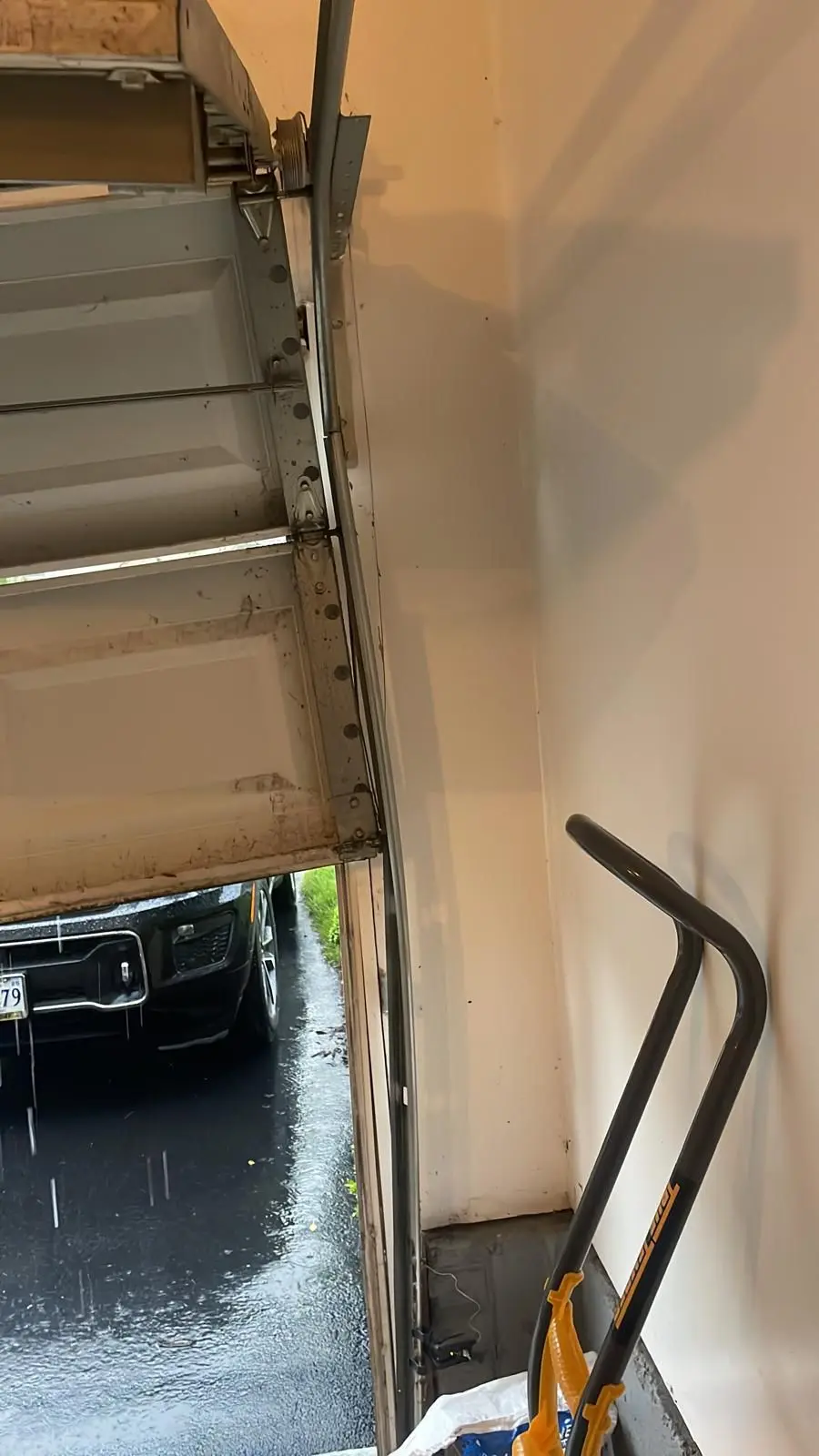
Tracks guide the door from vertical travel near the opening to horizontal travel into the ceiling space. When a track is bent, misaligned, or has debris in it, the door binds at that point during operation. You’ll usually hear it as a scraping or popping sound at the same position in the door’s travel every time.
A bent track section can sometimes be carefully straightened with a rubber mallet and a block of wood. A track that’s pulled away from the wall at a mounting bracket just needs the bolt tightened and the bracket repositioned. What you don’t want to do is force the door through a bind repeatedly, because the rollers take the damage when the track doesn’t give.
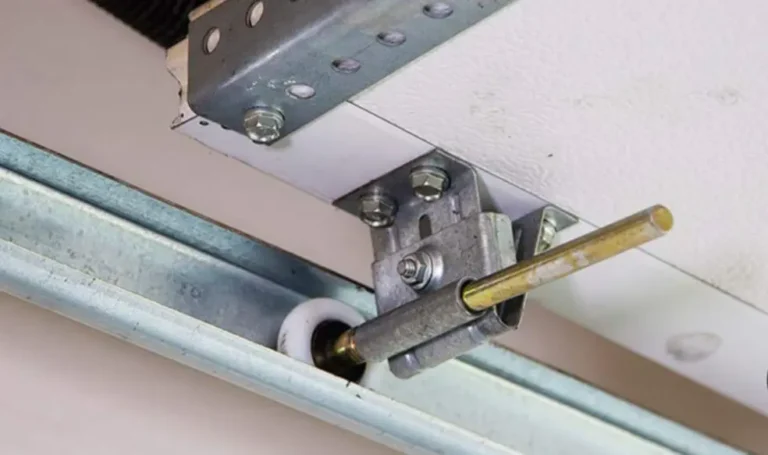
Rollers themselves wear out. Nylon rollers crack and chip. Steel rollers develop flat spots. Either type, when worn, creates binding and noise and puts lateral stress on the door panels. Roller replacement is one of the more cost-effective maintenance repairs because it affects how the entire door feels and sounds during operation.
Remote and Keypad Issues That Aren’t Actually Opener Problems
Sometimes the door works fine from the wall button but not from the remote. Or the keypad works intermittently. Before assuming the remote or keypad has failed, check a few things.
The remote’s signal range shrinks as battery voltage drops, even before the battery is fully dead. A remote that works at two feet but not from the car usually just needs a fresh battery. If a new battery doesn’t help, the remote may need to be reprogrammed to the opener. Most openers have a learn button that resets this pairing in about 30 seconds.
For keypads, the most common issue after battery replacement is moisture infiltration. Connecticut humidity and rain find their way into outdoor keypads over time, corroding the contacts. If keys feel sticky or certain combinations work inconsistently, moisture damage inside the keypad is likely. Replacement keypads are inexpensive and straightforward to program.
If neither the remote nor the keypad works but the wall button does, the issue is likely with the antenna on the opener itself. The antenna wire should hang freely from the motor unit. If it’s been coiled, pinched, or damaged, signal reception drops significantly.
For situations where the opener itself needs professional attention, garage door opener repair is available for both standard service calls and urgent situations.
When Lubrication Solves More Than You’d Expect
A surprising number of operational problems come down to a door that hasn’t been lubricated in years. Rollers, hinges, torsion spring coils, and the bearing plates on either end of the spring shaft all benefit from periodic lubrication. Dry components create friction, and friction creates resistance that the opener has to overcome. Over time, that resistance adds up.
Use a lithium-based or silicone spray lubricant rather than WD-40. WD-40 is a solvent and water displacer, not a long-term lubricant, and it can attract dust that makes the problem worse. A proper lubricant applied twice a year to the moving parts makes a meaningful difference in how quietly and smoothly the door operates, and it extends the life of every component it reaches.
Don’t lubricate the tracks. The rollers are meant to roll against a dry track surface. Lubricating the tracks creates a slippery surface that causes the rollers to slide instead of roll, which leads to binding and operational problems rather than solving them.
Garage doors have more moving parts than most mechanical systems in a home, and they cycle more often than almost any other piece of equipment. The majority of problems have straightforward causes once you know where to look, and many can be addressed without major repairs. When the issue goes beyond basic troubleshooting, getting a proper diagnosis before replacing parts saves both time and money. You can reach the team at Entrilift Garage Door through the contact page to schedule an assessment, or check reviews from local customers on Yelp to get a sense of how repairs are handled.
Frequently Asked Questions
Why does my garage door go back up after I try to close it? The most common causes are misaligned or dirty safety sensors, a close-limit setting that needs adjustment, or a bottom seal creating resistance the opener reads as an obstruction. Check the sensor lights first since that resolves the majority of these cases.
Why won’t my garage door open all the way? A door that stops before fully opening usually has a spring issue or an open-limit setting that needs adjustment. If the door feels heavy manually, the spring tension should be checked before anything else.
My opener runs but the door doesn’t move. What’s wrong? The disconnect trolley may have been disengaged. Look for the red rope hanging from the trolley and re-engage the carriage. If that’s not the issue, a broken spring is the next likely cause.
Why does my garage door work from the wall button but not the remote? Start with a battery replacement in the remote. If that doesn’t help, reprogram the remote using the learn button on the opener. If neither works, check that the antenna wire on the opener is hanging freely and undamaged.
How do I know if my garage door tracks are misaligned? Look for gaps between the roller and the track edge, listen for scraping at a consistent point during travel, or check whether the tracks look plumb and parallel from a standing position. Even small gaps at mounting brackets can cause binding.
Why is my garage door so loud when it opens? Noise usually comes from dry rollers, loose hardware, or worn components. Lubricating the rollers, hinges, and spring shaft often reduces noise significantly. Persistent scraping or grinding after lubrication points to worn rollers or a track issue.
Can cold weather cause my garage door to stop working? Yes. Cold temperatures thicken lubricants, harden rubber seals, and cause metal components to contract. A door that works fine in summer but struggles in winter often needs fresh lubrication and a bottom seal inspection before winter sets in.
What should I lubricate on my garage door? Rollers, hinges, torsion spring coils, and bearing plates benefit from lubrication. Use a lithium-based or silicone spray. Do not lubricate the tracks, as this causes rollers to slide rather than roll.
Why does my garage door shake or vibrate when moving? Loose track hardware is the most common cause. Check that all track mounting bolts are tight and that both vertical tracks are secured firmly to the wall framing. Worn rollers can also create vibration as they travel through the track.
When should I call a professional instead of troubleshooting myself? If the problem involves the springs, cables, or any component under tension, professional service is the safer choice. For opener motor issues, unusual grinding from the spring area, or anything involving the structural hardware at the top of the door, a technician should handle the diagnosis.